
Disinclination to Produce and Geopolitics in the evolution of technology

মোনেম শাহরিয়ার শাওন , University of Chittagong
প্রকাশ: ১০ মার্চ ২০২৬ পাঠ: ৯৩ বার
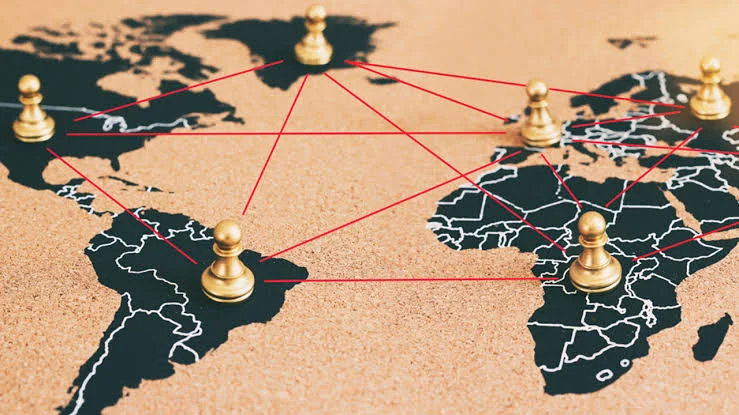
Disinclination to Produce and Geopolitics in the evolution of technology
The fourth industrial revolution in human civilization began with the inseparable necessity of technology. People are inventing new technologies to make life easier and more beautiful. From the telephone to super artificial intelligence, the innovations that people have made are only for their own benefit. Along with the progress of civilization, technology is also moving at its own pace. According to the 2025 report of the International Telecommunication Union (ITU), about 75% of the world’s population is directly involved in the use of technology, but the general statistics show that 68–73% of people are using technology. These statistics show that two-thirds of the world’s people are involved in technology, where technology is now an integral part of life. When people are able to easily do complex tasks due to a lack of time, it causes relatively less physical and mental fatigue, which is a positive aspect of technology. But as a result of this gradual evolution of technology, along with positive changes, many negative changes are also occurring. Although there are thousands of studies on the negative aspects, practically no steps are being taken on these aspects.
If we look at the agricultural sector and international politics, we see that there has been a huge change in agricultural production in the last hundred years. At one time, people used to do agriculture to meet their basic needs. Modern Europe and America were also once agriculturally dominant countries, where agricultural products were the main component of their life cycle. In the Arab world, the main agricultural production was animal products. They also used to do this work for food, clothing, and household goods. But in the developed countries of the modern world, there is a shift in production in the agricultural sector. Most countries are becoming dependent on imports of agriculturally produced products. They are more interested in producing machinery than agricultural products in their own country’s production sector. As a result, the modern developed world is gradually becoming dependent on the developing world. When this causes a widespread crisis in the economic model of developed countries, tariff wars begin. This war is not only in developed and developing countries, but this war is also spreading rapidly within developed countries. In a recent BBC News report, it was reported that the United States imposed tariffs of more than 100 percent on Chinese products, while China, in response, imposed tariffs of 84 percent on the United States. Now the question is, what does this growing ‘trade conflict’ between the two countries mean for the world economy? While this tariff war is having a huge impact on the economies of developed countries with strong budgets, the economies of developing and underdeveloped countries are in a very bad state.
Many bloody wars took place in the 20th and 21st centuries, and many wars are still ongoing today. The result of these wars is the death and damage of millions of people. Due to the strong budgets in the developed world, they do not actually suffer any losses; the developing world and underdeveloped countries indirectly compensate for this economic loss. A real example of this is the war between Ukraine and Russia, where the prices of oil products increased enormously throughout the world during the war. As a result of this war, even a poor and hard-working farmer was harmed. Basically, the diversion of agricultural production and competition in technology production and technology trade have brought about a new level of Cold War. In which developed countries are directly and indirectly involved.
Many summits were held to reduce the brutality of wars in the 20th century, one of which was the Geneva Convention. What are the main provisions of the Geneva Convention on the Rules of War? The Geneva Convention on war decides to limit the brutality of war and to protect those who do not take direct part in the fighting (such as civilians, doctors, aid workers) and those who can no longer fight (such as the wounded, sick, prisoners of war); these include the protection of life and limb, the humane treatment of prisoners, medical assistance, and the avoidance of attacks on civilian targets. Are the above-mentioned conditions being observed at all? The reality is that prisoners are being subjected to physical and psychological torture, including sexual abuse, bombardment of refugee camps, and the wounded are not given any treatment or food. This is in no way consistent with the decisions taken by the United Nations and the Geneva Convention, but rather is against the law and humanity. The number of wars is constantly increasing. It is difficult to find a settled state in the world where a possible state of war does not exist.
The first and foremost reason for such a situation is the unbridled progress and immoral use of technology. Where the main purpose of technological innovation and progress was to meet the needs and demands of people, the current world is turning region after region into death camps through the immoral use of technology. The current state has devoted itself only to technological innovation and technological commerce, leaving behind important branches of knowledge like literature, art, medicine, philosophy, and mathematics. Where one country is demonstrating the power of technology to another for the sake of political domination and economic benefits, an unstable political environment always exists. The unbridled immoral political use of technology is not only bringing about the overall welfare of the state, but is also damaging the moral and human qualities of individuals. Many AI Ethics researchers call this the Existential Risk of AI. To get out of this unstable situation, the state should focus more on the production of agricultural products. To get out of this unstable situation, the state must place more emphasis on the production of agricultural products, which will meet most of the basic needs of the people, and technology must also be planned to be used according to basic needs. Most countries on the European continent are using technology only for necessary purposes. Technology should not be used to threaten other countries in the national sphere.
Name: Monem Shahariar ShownStudent: Department of philosophy, University of Chittagong.
General Secretary : Bangladesh Youth Column writers’ Forum University of Chittagong.
Mobile : +8801822771065
Email: monemshahariarshown3040@gmail.com
লেখক: সাধারণ সম্পাদক, চট্টগ্রাম বিশ্ববিদ্যালয়।