
Climate Injustice in Bangladesh: Why the Poor suffer most?
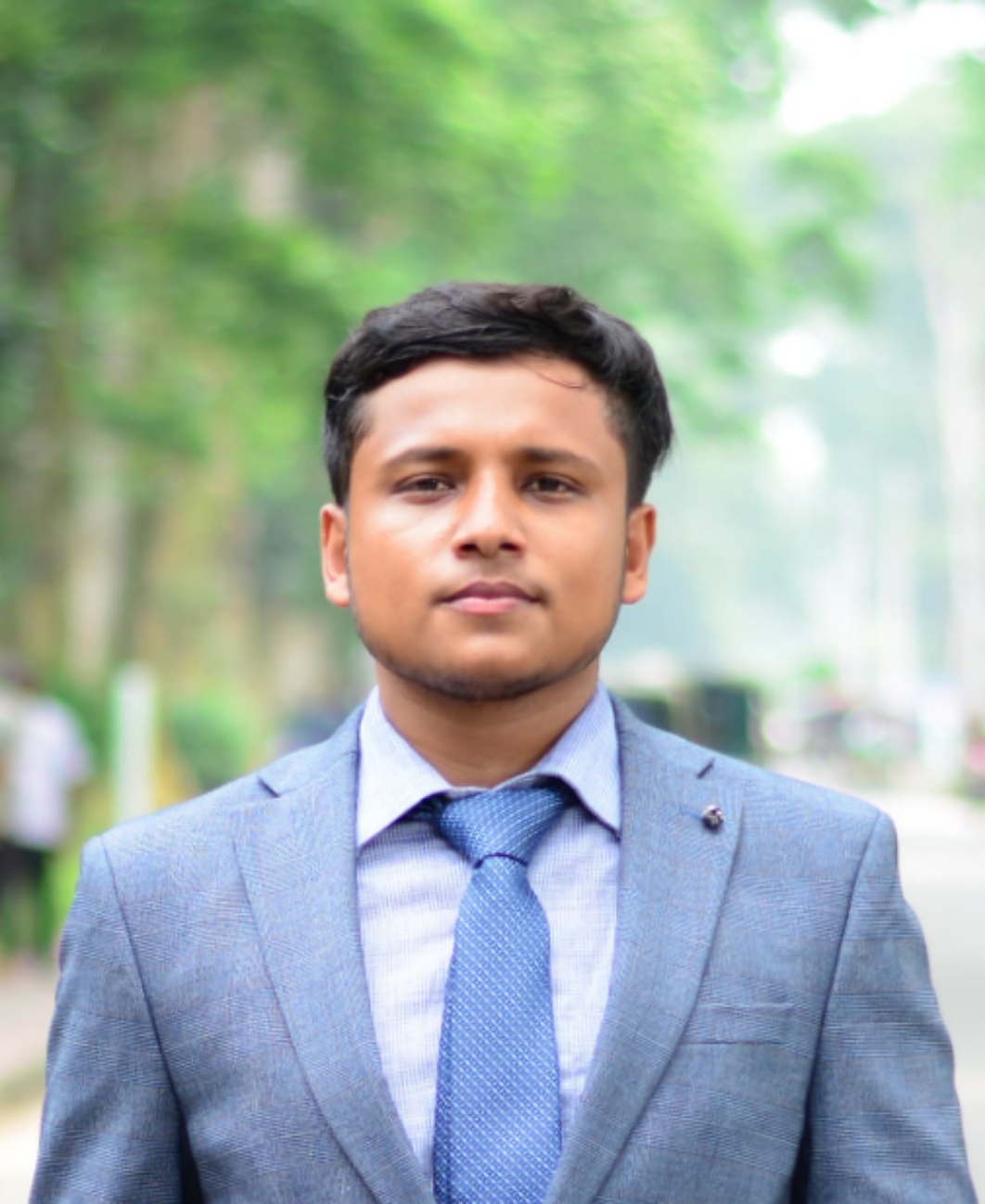
মোঃ সিহাব উদ্দীন , University of Rajshahi
প্রকাশ: ১২ মে ২০২৬ পাঠ: ৫৭ বার
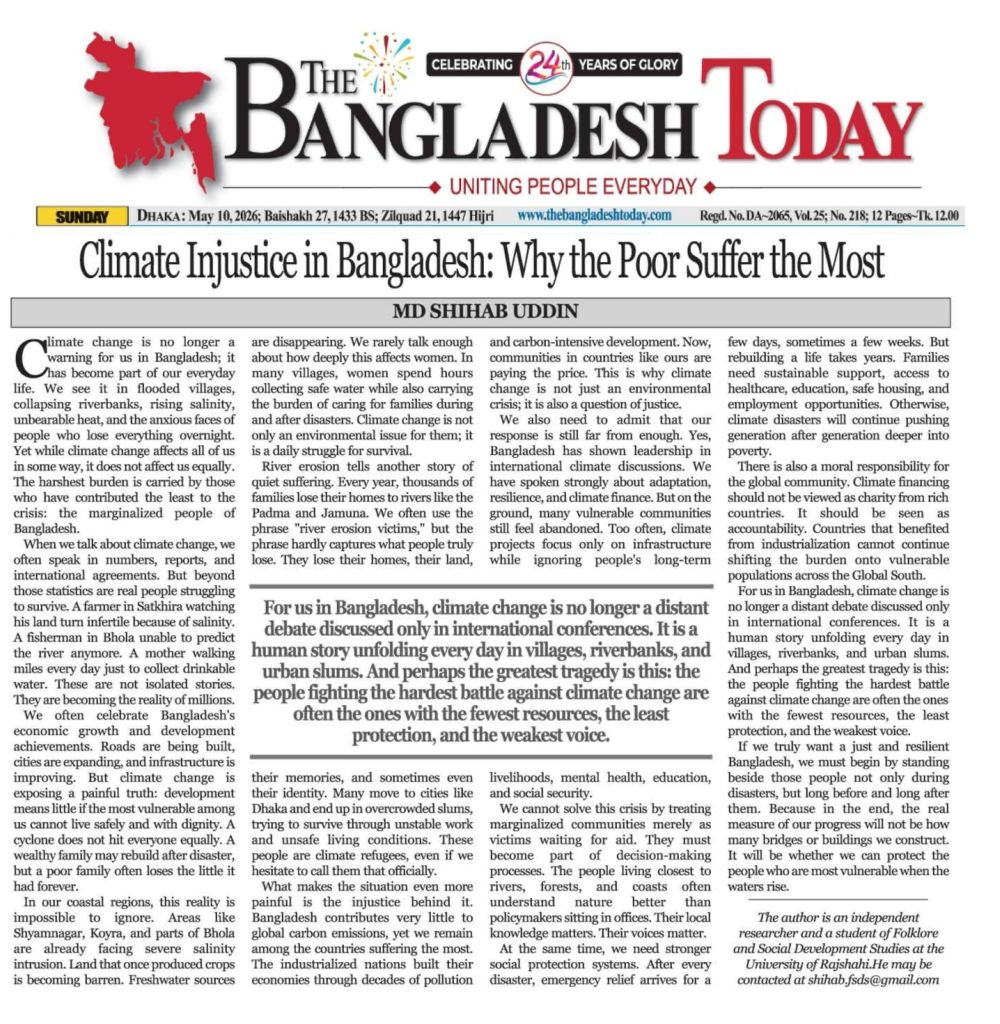
Climate change is no longer a warning for us in Bangladesh; it has become part of our everyday life. We see it in flooded villages, collapsing riverbanks, rising salinity, unbearable heat, and the anxious faces of people who lose everything overnight. Yet while climate change affects all of us in some way, it does not affect us equally. The harshest burden is carried by those who have contributed the least to the crisis: the marginalized people of Bangladesh.
When we talk about climate change, we often speak in numbers, reports, and international agreements. But beyond those statistics are real people struggling to survive. A farmer in Satkhira watching his land turn infertile because of salinity. A fisherman in Bhola unable to predict the river anymore. A mother walking miles every day just to collect drinkable water. These are not isolated stories. They are becoming the reality of millions.
We often celebrate Bangladesh’s economic growth and development achievements. Roads are being built, cities are expanding, and infrastructure is improving. But climate change is exposing a painful truth: development means little if the most vulnerable among us cannot live safely and with dignity. A cyclone does not hit everyone equally. A wealthy family may rebuild after disaster, but a poor family often loses the little it had forever.
In our coastal regions, this reality is impossible to ignore. Areas like Shyamnagar, Koyra, and parts of Bhola are already facing severe salinity intrusion. Land that once produced crops is becoming barren. Freshwater sources are disappearing. We rarely talk enough about how deeply this affects women. In many villages, women spend hours collecting safe water while also carrying the burden of caring for families during and after disasters. Climate change is not only an environmental issue for them; it is a daily struggle for survival.
River erosion tells another story of quiet suffering. Every year, thousands of families lose their homes to rivers like the Padma and Jamuna. We often use the phrase “river erosion victims,” but the phrase hardly captures what people truly lose. They lose their homes, their land, their memories, and sometimes even their identity. Many move to cities like Dhaka and end up in overcrowded slums, trying to survive through unstable work and unsafe living conditions. These people are climate refugees, even if we hesitate to call them that officially.
What makes the situation even more painful is the injustice behind it. Bangladesh contributes very little to global carbon emissions, yet we remain among the countries suffering the most. The industrialized nations built their economies through decades of pollution and carbon-intensive development. Now, communities in countries like ours are paying the price. This is why climate change is not just an environmental crisis; it is also a question of justice.
We also need to admit that our response is still far from enough. Yes, Bangladesh has shown leadership in international climate discussions. We have spoken strongly about adaptation, resilience, and climate finance. But on the ground, many vulnerable communities still feel abandoned. Too often, climate projects focus only on infrastructure while ignoring people’s long-term livelihoods, mental health, education, and social security.
We cannot solve this crisis by treating marginalized communities merely as victims waiting for aid. They must become part of decision-making processes. The people living closest to rivers, forests, and coasts often understand nature better than policymakers sitting in offices. Their local knowledge matters. Their voices matter.
At the same time, we need stronger social protection systems. After every disaster, emergency relief arrives for a few days, sometimes a few weeks. But rebuilding a life takes years. Families need sustainable support, access to healthcare, education, safe housing, and employment opportunities. Otherwise, climate disasters will continue pushing generation after generation deeper into poverty.
There is also a moral responsibility for the global community. Climate financing should not be viewed as charity from rich countries. It should be seen as accountability. Countries that benefited from industrialization cannot continue shifting the burden onto vulnerable populations across the Global South.
For us in Bangladesh, climate change is no longer a distant debate discussed only in international conferences. It is a human story unfolding every day in villages, riverbanks, and urban slums. And perhaps the greatest tragedy is this: the people fighting the hardest battle against climate change are often the ones with the fewest resources, the least protection, and the weakest voice.
If we truly want a just and resilient Bangladesh, we must begin by standing beside those people not only during disasters, but long before and long after them. Because in the end, the real measure of our progress will not be how many bridges or buildings we construct. It will be whether we can protect the people who are most vulnerable when the waters rise.
Md Shihab Uddin
Volunteer, UNICEF Bangladesh
The author is an independent researcher and a student of Folklore and Social Development Studies at the University of Rajshahi.He may be contacted at shihab.fsds@gmail.com