
Eid for Street Children: A Glimpse of Joy, Sorrow, and New Hope

Eid for Street Children: A Glimpse of Joy, Sorrow, and New Hope
Sadia Sultana Rimi
Eid is a significant religious and cultural festival that brings messages of joy and unity to people across the country. However, an integral part of our society—street children—often remain on the sidelines of this celebration. Various NGOs, social workers, and volunteer organizations make special arrangements to bring moments of joy to these children, offering them a sense of relief and hope.
Eid-ul-Fitr holds a special place in the lives of Muslims. It is not just about religious rituals or family gatherings; it symbolizes new clothes, delicious food, a festive atmosphere, and a sense of unity. While this festival brings moments of excitement to many families, it presents a different reality for an exploited and neglected segment of society—street children.
During Eid, every home is filled with lights, laughter, and joy. Families come together, decorate their homes, and celebrate the occasion with delicious meals. Exchanging Eid cards, wearing new clothes, and participating in special programs strengthen social bonds. However, not everyone experiences this joy equally. Due to economic, social, and familial disparities, for many street children, Eid remains nothing more than an unfulfilled dream.
Street children, who are often separated from their families, have faced struggles and hardships from an early age. Their daily life is a harsh reality—sleeping under the open sky, on sidewalks, or in slums, enduring hunger, extreme weather conditions, and social neglect.
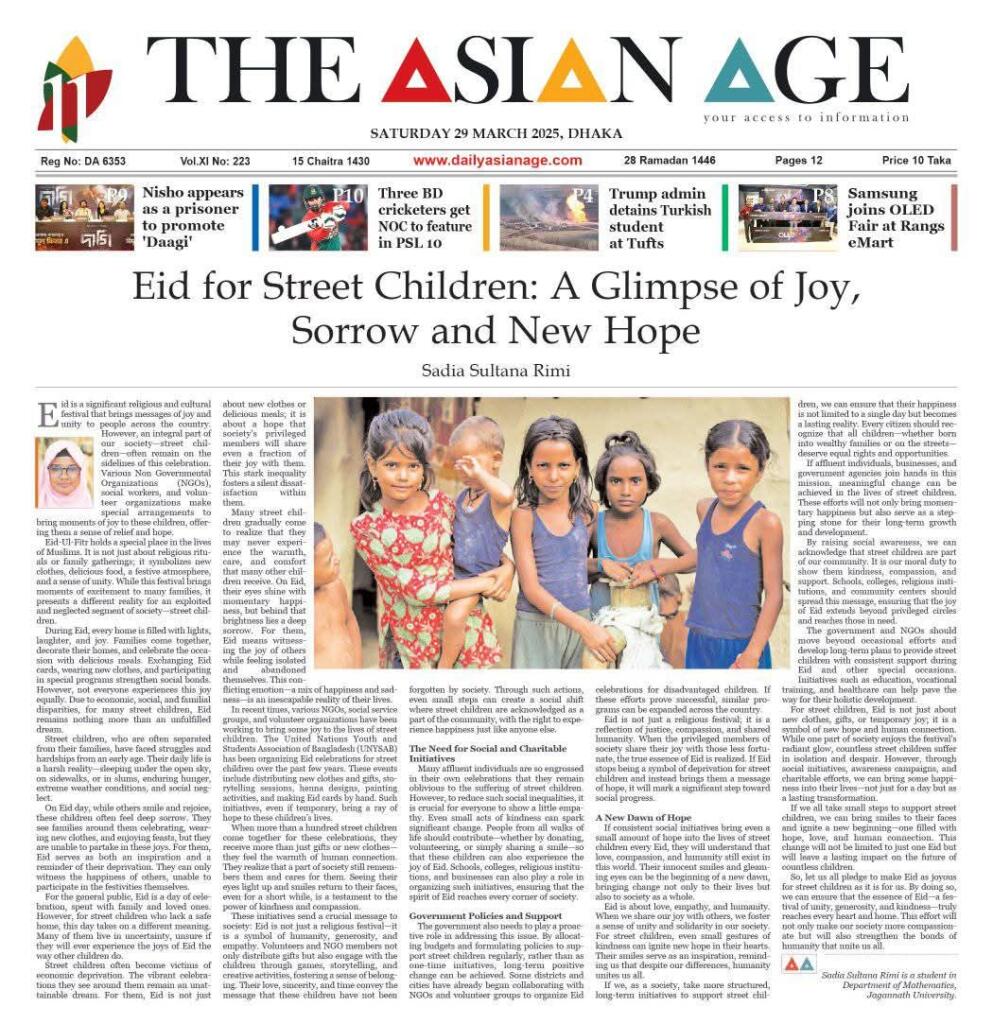
On Eid day, while others smile and rejoice, these children often feel deep sorrow. They see families around them celebrating, wearing new clothes, and enjoying feasts, but they are unable to partake in these joys. For them, Eid serves as both an inspiration and a reminder of their deprivation. They can only witness the happiness of others, unable to participate in the festivities themselves.
For the general public, Eid is a day of celebration, spent with family and loved ones. However, for street children who lack a safe home, this day takes on a different meaning. Many of them live in uncertainty, unsure if they will ever experience the joys of Eid the way other children do.
Street children often become victims of economic deprivation. The vibrant celebrations they see around them remain an unattainable dream. For them, Eid is not just about new clothes or delicious meals; it is about a hope that society’s privileged members will share even a fraction of their joy with them. This stark inequality fosters a silent dissatisfaction within them.
Many street children gradually come to realize that they may never experience the warmth, care, and comfort that many other children receive. On Eid, their eyes shine with momentary happiness, but behind that brightness lies a deep sorrow. For them, Eid means witnessing the joy of others while feeling isolated and abandoned themselves. This conflicting emotion—a mix of happiness and sadness—is an inescapable reality of their lives.
In recent times, various NGOs, social service groups, and volunteer organizations have been working to bring some joy to the lives of street children. The United Nations Youth and Students Association of Bangladesh (UNYSAB) has been organizing Eid celebrations for street children over the past few years. These events include distributing new clothes and gifts, storytelling sessions, henna designs, painting activities, and making Eid cards by hand. Such initiatives, even if temporary, bring a ray of hope to these children’s lives.
When more than a hundred street children come together for these celebrations, they receive more than just gifts or new clothes—they feel the warmth of human connection. They realize that a part of society still remembers them and cares for them. Seeing their eyes light up and smiles return to their faces, even for a short while, is a testament to the power of kindness and compassion.
These initiatives send a crucial message to society: Eid is not just a religious festival—it is a symbol of humanity, generosity, and empathy. Volunteers and NGO members not only distribute gifts but also engage with the children through games, storytelling, and creative activities, fostering a sense of belonging. Their love, sincerity, and time convey the message that these children have not been forgotten by society. Through such actions, even small steps can create a social shift where street children are acknowledged as a part of the community, with the right to experience happiness just like anyone else.
The Need for Social and Charitable Initiatives
Many affluent individuals are so engrossed in their own celebrations that they remain oblivious to the suffering of street children. However, to reduce such social inequalities, it is crucial for everyone to show a little empathy. Even small acts of kindness can spark significant change. People from all walks of life should contribute—whether by donating, volunteering, or simply sharing a smile—so that these children can also experience the joy of Eid. Schools, colleges, religious institutions, and businesses can also play a role in organizing such initiatives, ensuring that the spirit of Eid reaches every corner of society.
Government Policies and Support
The government also needs to play a proactive role in addressing this issue. By allocating budgets and formulating policies to support street children regularly, rather than as one-time initiatives, long-term positive change can be achieved. Some districts and cities have already begun collaborating with NGOs and volunteer groups to organize Eid celebrations for disadvantaged children. If these efforts prove successful, similar programs can be expanded across the country.
Eid is not just a religious festival; it is a reflection of justice, compassion, and shared humanity. When the privileged members of society share their joy with those less fortunate, the true essence of Eid is realized. If Eid stops being a symbol of deprivation for street children and instead brings them a message of hope, it will mark a significant step toward social progress.
A New Dawn of Hope
If consistent social initiatives bring even a small amount of hope into the lives of street children every Eid, they will understand that love, compassion, and humanity still exist in this world. Their innocent smiles and gleaming eyes can be the beginning of a new dawn, bringing change not only to their lives but also to society as a whole.
Eid is about love, empathy, and humanity. When we share our joy with others, we foster a sense of unity and solidarity in our society. For street children, even small gestures of kindness can ignite new hope in their hearts. Their smiles serve as an inspiration, reminding us that despite our differences, humanity unites us all.
If we, as a society, take more structured, long-term initiatives to support street children, we can ensure that their happiness is not limited to a single day but becomes a lasting reality. Every citizen should recognize that all children—whether born into wealthy families or on the streets—deserve equal rights and opportunities.
If affluent individuals, businesses, and government agencies join hands in this mission, meaningful change can be achieved in the lives of street children. These efforts will not only bring momentary happiness but also serve as a stepping stone for their long-term growth and development.
By raising social awareness, we can acknowledge that street children are part of our community. It is our moral duty to show them kindness, compassion, and support. Schools, colleges, religious institutions, and community centers should spread this message, ensuring that the joy of Eid extends beyond privileged circles and reaches those in need.
The government and NGOs should move beyond occasional efforts and develop long-term plans to provide street children with consistent support during Eid and other special occasions. Initiatives such as education, vocational training, and healthcare can help pave the way for their holistic development.
For street children, Eid is not just about new clothes, gifts, or temporary joy; it is a symbol of new hope and human connection. While one part of society enjoys the festival’s radiant glow, countless street children suffer in isolation and despair. However, through social initiatives, awareness campaigns, and charitable efforts, we can bring some happiness into their lives—not just for a day but as a lasting transformation.
If we all take small steps to support street children, we can bring smiles to their faces and ignite a new beginning—one filled with hope, love, and human connection. This change will not be limited to just one Eid but will leave a lasting impact on the future of countless children.
So, let us all pledge to make Eid as joyous for street children as it is for us. By doing so, we can ensure that the essence of Eid—a festival of unity, generosity, and kindness—truly reaches every heart and home. This effort will not only make our society more compassionate but will also strengthen the bonds of humanity that unite us all.